The Silent Heist: How Car Thieves Use Your Home’s Floor Plan to Steal Your Car
HomePrivacy Team
Privacy Specialist
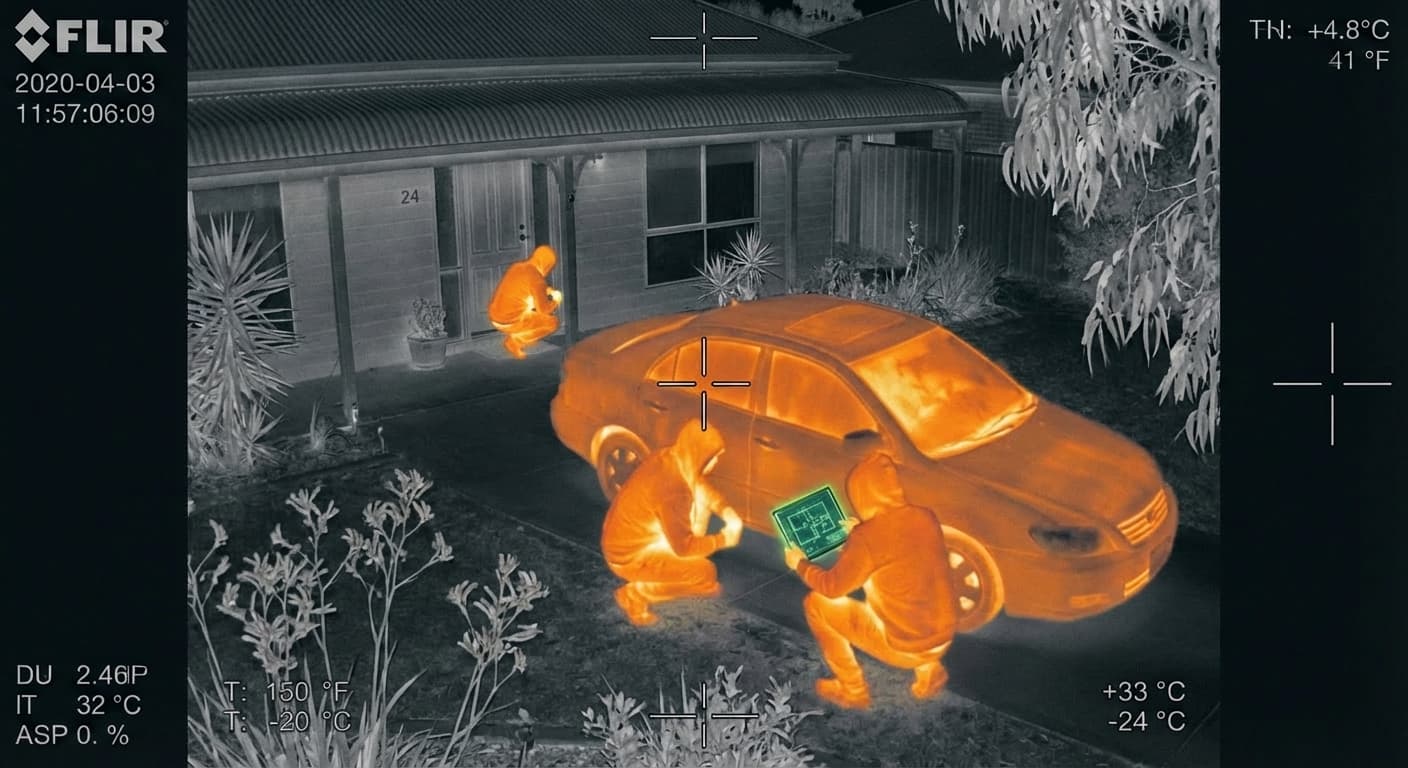
Imagine waking up, grabbing your morning coffee, and looking out the window only to find your driveway empty. No broken glass, no neighborhood alarms, and your keys are still sitting exactly where you left them on the kitchen island.
You’ve just been the victim of a relay hack.
While we often think of car theft as a "street crime," modern thieves are using the internet and your home’s layout to execute high-tech heists with surgical precision. Here is how your floor plan might be helping them—and what you can do to stop it.
What is a Relay Hack?
As explained by Practical Motoring, a relay attack exploits the "always-on" signal of your keyless entry fob.
- The Scout: One thief stands next to your car with a transmitter.
- The Receiver: A second thief walks around the perimeter of your house with a relay amplifier.
- The Connection: The amplifier "grabs" the signal from your key fob inside the house and beams it to the transmitter by the car.
- The Theft: The car thinks the owner is standing right there, unlocks the doors, and allows the engine to start. The whole process takes less than 60 seconds.
The Digital Map: How Thieves Use Your Floor Plan
You might wonder: How do they know where my keys are? In the digital age, thieves don't always have to guess. They use the internet to "casing" your home before they even arrive.
- Real Estate Listings: If your home was recently bought or rented, floor plans and 3D virtual tours are often still available online. Thieves can see exactly where the "entryway mudroom," "hallway console," or "kitchen nook" is located.
- Social Media: A simple "room tour" or a photo of your new interior design on Instagram can reveal the proximity of your key bowl to the front door or a thin exterior wall.
By studying these layouts, a thief knows exactly which wall to stand against to pick up your key's signal. They aren't wandering blindly; they are targeting the specific spot where your floor plan suggests a "key drop" would be.
Identifying "Hot Zones" in Your Home
Based on common floor plans, these are the areas most vulnerable to relay hacking:
- The Foyer/Entryway: This is the #1 target. Most people leave keys on a hook or table right by the front door. This is often less than three feet from the thief standing outside.
- The Garage Interior Wall: If you hang your keys on the wall inside the door leading to the garage, the signal only has to travel through one layer of drywall to reach a thief in your driveway.
- Bedroom Nightstands: If your bedroom is on the ground floor facing the street, a thief can walk along the exterior wall and "ping" the keys sitting on your bedside table.
How to Protect Your Vehicle (and Your Privacy)
The good news is that defeating a high-tech thief is surprisingly low-tech.
- The Faraday Defense: Store your keys in a "Faraday pouch" or a metal tin (like an old Altoids box). These act as a shield, blocking the radio frequency from leaving the container.
- Strategic Placement: Use your knowledge of your floor plan to your advantage. Move your "key zone" to the center of the house, away from external walls, windows, and doors.
- Digital Scrubbing: If you’ve recently moved, contact real estate sites (Zillow, Redfin, etc.) to request that interior photos and floor plans of your home be removed or blurred.
- Physical Deterrents: As Practical Motoring suggests, a steering wheel lock or a visible security camera can make a thief move on to an easier target. Even if they hack the signal, they can't easily bypass a physical bar on the wheel.
The Bottom Line: Your car’s security no longer starts at the driveway—it starts at your front door. By being mindful of where you place your keys and what information you leave online, you can ensure your car stays exactly where it belongs.
Ready to reclaim your
home's privacy?
Don't let your property data remain a public liability. Start your privacy scan today and see what the world sees.
Scan My Property